A Look at Chris Farina’s final film with Paul Wagner and Peter Thompson
By WTJU
Date: 08/27/2026
Time: 4:00 pm
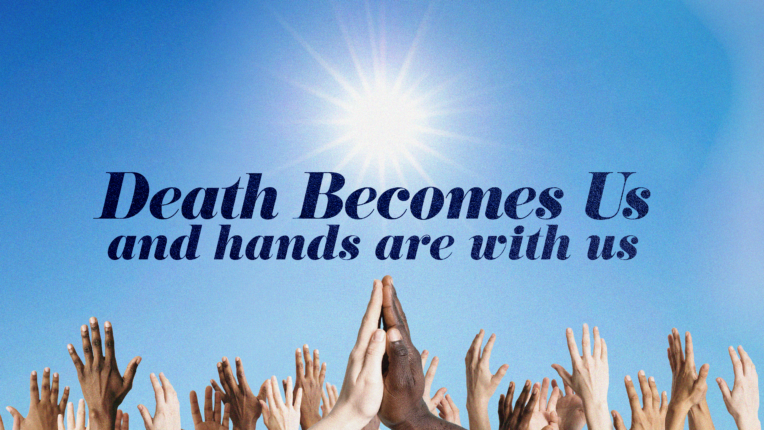
Academy award winning indie filmmaker Paul Wagner and colleague Peter Thompson will stop by WTJU this Thursday afternoon during Folk & Beyond to discuss their friend Chris Farina’s film, Death Becomes Us and Hands Are With Us. This is a film near and dear to Chris as it will be his final one. Folk & Beyond airs Thursday afternoon from 4-7 (eastern) at 91.1FM, online at wtju.net, and via the WTJU app.
Death Becomes Us is a a feature documentary exploring people’s attitudes, beliefs, and perspectives on death. The film will follow the after-death path the body takes before being placed in its final resting place. Integral to the film will be observing and speaking with individuals who intersect with this process, spending time with the various individuals whose daily work is involved with a recently departed human being. The film’s focus will be on the people who “touch the body.”
By spending time with individuals who deal with death in a daily and physical way, and by allowing these subjects to openly discuss their own individual perspectives on death, my goal is to subtly lead the viewer to look within themselves to ask questions that many people are afraid to discuss openly and honestly. My hope is that the film will generate open and honest discussion of death and how we perceive it.
Host 00:00
For those who have been around the Charlottesville area, you may well recognize the name Chris Farina. Of course, he was the star of that great film, the Parking Lot movie, which is how I first became aware of him. But he’s also directed films such as “A Bridge to Life”, “Pep Banned”, and the one I think I first became aware of him on was “West Main Street”, and he’s done some other films since then. And there’s one that is being done right now by him, his final film. It is titled “Death Becomes Us and Hands Are With Us”, and I have got Peter Thompson and Paul Wagner to chat about that because we’re in the last stages of the funding for that. So welcome, gentlemen.
Peter Thompson 00:47
Good to be here. Thank you for having us.
Host 00:49
Well, let’s talk about this film, how it came to be, and why it’s happening.
Peter Thompson 00:53
Well, I’ve I’ve known Chris since our undergraduate days at UVA, which were more than a few years ago, and we’ve remained friends through many circles, including his working at the parking lot coincide when I worked at the Virginian back in the 80 s. We got to be closer in those time, and I remember about 10 years ago he asked me. I was the director at the then called Senior Center, now the Center of Belvedere. He was thinking of doing a film on on death and dying, and I knew his film and I knew the ability for his films to be thought provoking and inspiring, and I was all in. I’m like, oh my gosh, this United States society really needs this film and needs this conversation. And he he started filming it, and then got sidetracked with some other projects. And then four years ago, he was diagnosed with ALS, and he finished a few other films and picked this film back up. And that’s the impetus of a little quick history of how the film came to be and how what what he’s looking for this film to do for our community and our society.
Host 01:51
Paul, what’s your background with Chris?
Paul Wagner 01:54
Well, first of all, Chris and I are buddies. We’re neighbors. Over the years, we’ve just had a great, loving, wonderful friendship, but we’re also both filmmakers, and both kind of you know, elitely style ourselves as what we call independent filmmakers. We we both both over our careers have made films you know on contract for clients, but most of our films, and really certainly most of Chris’s have been what we call independent films, which means you just look out in the world, you get excited about a particular subject, and feel compelled to say something about that subject as a as a filmmaker or artist. And so it’s not an easy lifestyle, I have to say. And so when Chris and I run each other, usually we’re complaining about how hard it is to get our projects off the ground and get these films made, but over the years Chris has become an institution. People may remember West Main Street, which was an incredible kind of breakthrough local film, you know, that documented this stretch of Charlottesville that everybody knows and drives along and walks through, but Chris actually went door to door and knocked on people’s homes and businesses and got to know them as human beings and residents of Charlottesville and really helped shape the way people think about life in Charlottesville. Another great film, World Peace, and other fourth-grade achievements was filmed that just I put just in quote marks, just a local classroom here in a public school in Charlottesville, but it became a film that’s gone all around the world and affected people’s thinking about peace and what can be achieved with regard to world peace? So he’s he’s kind of specialized in films that seem to be local and are local in the best sense, but with themes that expand beautifully across the world and across humanity, really. And this new film, “Death Becomes Us”, is very much in that vein.
Host 04:04
I’m reminded of the Stephen Jay Gould quote: “Think global, act local”, and so he really brings that out.
Speaker 3 04:10
Exactly. Yeah, there.
Host 04:11
Well, you talk about independent filmmaking, and of course, that does mean fundraising as well. That’s that’s a big part of what makes it so challenging. I imagine
Paul Wagner 04:20
It absolutely is, and I have to say that’s one of the things that Chris and I would always commiserate with each other. You know, one of the great things with this film is that Peter, who’s here with us, has jumped in and and is working with Chris on that aspect. And I’ll let him kind of speak to that.
Peter Thompson 04:38
Yes, I mean several months ago, probably eight nine months ago, Chris contacted me about whether I still had connections with the senior center world because while he was finishing the film and raising money for the film, he was also starting to think about distribution and the social impact, and that’s how I got involved with the project as well as being a friend of Chris and his families, and. You know, I’m working that a little bit, and we do have. I’m actually a national delegate council meeting in a couple of weeks to to help talk to senior center leaders around the country about using this film in the way we’ve talked about. And it came my attention that you know he still needed, and the more we talked about it, came up with about $70,000 to finish financing the film, and you know, independent documentary filmmakers are not making a huge. You know, they’re not Hollywood stars living in Malibu for the most part. And Chris certainly, he has supported his art through owning the Corning Park Corner Park a lot all these years. But with his ALS, you know, he and his family are really not in a position to subsidize his film. And so I’m like, here’s a way I can step up. I’ve done some some of this in my life, and we were able to identify a donor who made an anonymous $35,000 matching gifts. And once you raise 35,000, I’ll give 35,000, and we’ll finish financing the film. And we want to do that by the end of August, which is coming up. We’re somewhere in the 30 plus 1000 range it goes through something called the film collaborative is this fiscal agent they’re a 501c3 so donations are tax deductible and I don’t have the August report yet to know exactly where we are but we’re close but we need to to get over that finish point so that Chris can you know pay his final bills and and not you know not have this make sure this film is is out, and that there’s some dollars in the bank to help with distribution as well.
Host 06:26
Is there a website that folks can go to?
Peter Thompson 06:29
There is a Rosalia Films, which is R O S A L I A films.com, is Chris’s site, and you can see very easy to drop down menu. You know, films, and you can go to “Death Becomes Us”. If you lost that, listeners, just Google “Death Becomes Us” or Chris Farina film. It’ll pop up pretty readily, and it has a trailer and a little bit about the social impact plan, and then the famous donate online link as well.
Host 06:55
And we’ll make sure we have that link up at wtju.net as well, so folks can easily find it. But I’m just my my parents live in a senior facility up in just outside of Baltimore. About 12 years ago, they had read this book by Atul Gawanda titled “Being Mortal”, and it was about getting comfortable talking about death and you know and what leads up to it. And it’s it’s a hard conversation, and you know, so having I think a film out there is really going to open a lot of eyes because, as we know, you know some folks read, not everyone does. So having a film that you can actually put your eyes and ears to is a valuable thing. And does it? Does the film just is it with medical folks as well as people who are? What’s the overall? Who are they? Who’s involved in it?
Peter Thompson 07:42
Yeah, it’s it’s a good question. I mean, of course, you know it’s such a big topic, and he wants the film to be you know roughly 50 minutes in order for it to eventually be on PBS. He hopes, which is a good possibility. In fact, they’re they’re screening it, I think, this week to consider that. You know, he he chose really it’s kind of that last stages, and then what happens when a person passes? So he talks to the people at the hospital who do transportation after somebody dies. He talks to people at hospitals of Piedmont. He talks to a death doula who actually is late stages helping people process the transition to the final act. He talks to people at churches who who do lead memorials. He talks the person who carves tombstones, actually in his hometown of Baltimore. Most of it’s in Charlottesville, but that person’s in Baltimore, and a local person who’s a volunteer at his local faith community who works with the volunteers who just maintain the cemetery at the church, and it’s really designed to humanize this, try to help make it less scary, as you referred to. And for some reason, in the United States, we don’t have a healthy relationship with death and dying. There’s a lot of talks about that. Guandi’s book is a great read about that. A lot of it, since we institutionalized death and dying and put it in hospitals and out of our home, we could fill hours talking about just that challenge, but that’s his focus of who he speaks with in a way to try to help get us like this is not that scary. This is just part of something that we will all go through ourselves, and most of us will go through with family and friends countless times in our lives, and so it’s designed to really help people not be afraid of it, and and talk about it, and hopefully talk with their families and be prepared for it.
Paul Wagner 09:26
I’ll just mention following up on what I said earlier about Chris working locally but drawing out universal themes. As Peter mentioned, almost everyone in this film is a local person, local service provider, or whatever. One of them that Peter didn’t mention, I’ll just want to feature because I’m such a fan. Is Ryland Coles, who is a singer, you know, member of a well-known singing family here in Charlottesville, and Ryland actually sings in the film. One of my favorite spirituals that he sometimes sings at memorial services or. His eye is on the sparrow, which is incredibly moving. That’s just to give you a little flavor for what’s in the film. But and and we mentioned that I know Chris wants to see the film on public television, which would be a great place for lots of people to see it. But also, I think it’s worth pointing out. You mentioned a book that a lot of people use to kind of stimulate conversations about the subject, and that’s how this film, I think, may be the most powerful use-not not just broadcast to you know 1000s of people, but shown in small groups for five or 10 people as a place to start a conversation about this really intimate but challenging subject that we all have to deal with, but none of us wants to deal with. And I think the film will be so powerful because it just opens up your mind, it opens up your heart and your voice to being able to talk about this tough subject that is of such benefit to talk about.
Host 11:04
Well, I mentioned my my parents introduced me to that book, but they at their senior facility, they they invited everyone, and only you know there were a couple thousand people there, but only a handful of folks got up and walked out the door because they said this isn’t something we should be discussing, and it was-it’s a relevant topic for us all. Not not just those who are getting older, but you know, younger people need to think about this too, because it’s going to happen to their parents and maybe even to themselves. So we have to be willing to talk about it now. And so this film just sounds like it’s there for.
Peter Thompson 11:39
Us all. Absolutely, my wife and I attended a a film on late stage healthcare and the challenges that America has with with that phase of older age and and late stages as as people are dying. We went to a screening at screening of that a couple months ago at the center, and there was about 30 or 40 people there. It was during one of those heat domes where most people like didn’t want to leave their house, a lot of people showed up, watched the film. It was facilitated discussion afterwards for about an hour, and the discussion was nobody left. It was very vibrant, very honest. And as the second hour was winding up, the facilitator kind of looked to his watch and looked around. It’s like, well, we didn’t get to a lot of questions, but I want to honor people’s time. And before he could finish the thought, everybody’s like, “Can we keep going? I mean, people wanted to stay and talk about it. And my experience, having worked 24 years at the center with older adults, primarily, older adults tend to want to talk about it more because they’re more they’re more real and practical about it. Tends to be more people in their 20s, 40s, and 50s who were in the denial of it, but you’re exactly right. Those folks need to be facing it. You may lose friends yourself or spouses. I just had a very dear friend pass at 62 last week. Good friend of Chris’s as well. And importantly, think how do we help our older our parents with this? And in my experience, my mom, my mom wanted to talk about it. She was so glad that I I was there, and it’s like you know, and and all ears to her because I visited a lot of folks again in my role at the center, and I’d have people talk about death and dying and what they wanted and what they didn’t and what they were going through, and I would listen and not judge and not stop them. And I can’t tell you how many times people say, “Thank you for listening. You know, my son, my daughter says, “Oh, Daddy, don’t talk like that. Oh, I don’t want you know, or walk can’t hear it. Everybody suffers from that. The individual who wants to talk about it suffers it. Like, here’s my last moments with my loved ones, and I know from my family, I have siblings who I think are still processing both of our parents’ passing, and my dad died 26 years ago. I miss my mom and dad, but I don’t have any unfun, you know, dysfunctional grief about it because I feel like I was was there with them through that. So that’s a lot of what Chris is aiming to do, and Paul’s exactly right, trying to get this out in in society, local community groups. We’re having some initial very fruitful so far conversations with some experts here at the university to create curriculum guides both for professionals so it can be taught to like nursing students and whatnot but also then just that community group that you Peter or you Paul or you listener can take it and have a discussion group about facilitating discussion about this topic. That’s where Chris wants us to go. That’s the social impact vision that he aims for. That we’re excited. It looks like we’ve gone some good paths.
Host 14:29
Well, if you want to,
Paul Wagner 14:30
It might also be worth mentioning. This just maybe a personal thought of mine, but I think it’s worth making. It used to be that death as the kind of ultimate life milestone was a central aspect of conversations around religion and faith, and everybody was a member of a church in generations past. Now, not so much, and I think there’s a real need for us to find other modalities, if you will, other means. To address these, you know, critical life issues, as I say, it’s the ultimate milestone, and we’ve all got to deal with it and confront it and reconcile ourselves to it. And this film is a way to kind of address those issues, whether you’re a member of a faith community or not.
Host 15:19
My my father, in his last weeks, he he had something he wanted to share with his older brother’s children, and and I was up there for the last week before he passed, and every hour he was, I have to get this done because they need to hear it, and he finally that afternoon he got it done. He sent it off, and he answered so many questions for them that they had never been able to get from their own father. And they all called him. And but at the end of the day, he was saying, “Okay, I’ve done everything I needed to. And just like six hours later, he passed.
Peter Thompson 15:58
Don’t we all want that for ourselves and our loved ones as peaceful a passing as can be. I mean, Anban’s passing was beautiful in the end because she had done what she needed to do. She did not have any skeletons. It was clear what she did and did not want at the end of life. And I and some of my family members were there to make sure you know that she died at home, pain free, and was very peaceful and very powerful at 92, and so that we want that for ourselves, but we don’t know quite a we don’t think about it, we don’t plan for it. There’s not necessarily people there, and and one thing I actually want to read a quote from from Chris that speaks to that too, and the film title, and you know we mentioned Chris has ALS, and and he’s not he he’s able to communicate through technology and through his team and things be able to finish the film, but not able to do live interviews at the stage. Why Paul and I are here, but he did using email sent me this message a couple weeks ago. I began filming this project over 10 years ago, and many other film projects interfered with the completion. The original title was “Death Becomes You. Four years ago, when I was diagnosed with ALS and living with ALS and having wonderful care, helped me change the film title to “Death Becomes Us” and “Hands Are With Us. And the “Hands Are With Us” edition speaks a lot to what Paul and I have been talking about: is that he wants people to not be fearful of this, and what he’s experienced with family, friends, professional caregivers. Hands are with us through this. We don’t have to go through this alone. We won’t go through this alone. We don’t need to go through this alone. But you know, again, our U.S. society-we always-we’re not always good at asking for help or even accepting help when it’s offered. But hands are with us is such a powerful message. I was so glad he sent that to me, and I did not know that story until he sent it. I think sums up in a lot of ways the way this this film has been for him as a filmmaker and the transition he’s been going through to help complete this film, not just for him and his family, but for all of us.
Host 17:53
Well, for more details, including you can watch a little trailer about this film. Head over to RosaliaFilms.com. That’s R O S A L I A rosaliafilms.com, and you can watch a trailer and find out more about the project and how you can help support it. Paul Wagner, Peter Thompson, thanks for stopping by.
Peter Thompson 18:12
Thank you, Peter. Thank you, WTJU,
Host 18:13
and of course thanks to Chris Farina for putting this film together.