
Arts This Week: ‘See Memory’ at the Violet Crown
By Ben Larsen
PODCAST:
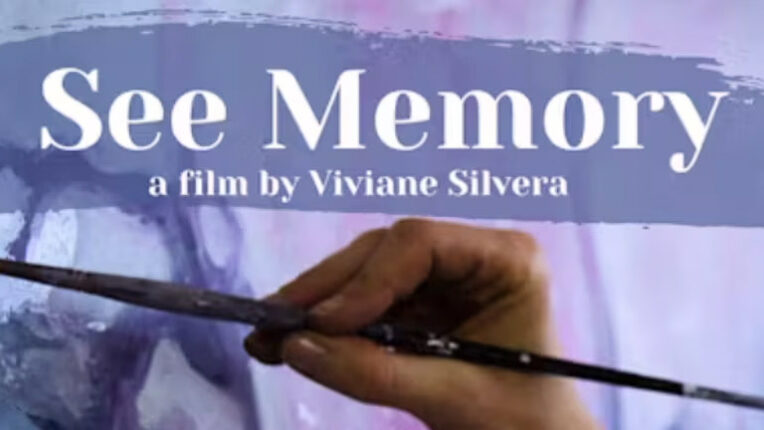
See Memory is premiering at the Violet Crowne on the Downtown Mall this Wednesday, February 25 at 7pm as part of the Fralin downtown film series.
TRANSCRIPT:
Sara Bastianelli:
You’re listening to WTJU Charlottesville. For Arts This Week, we spoke with Viviane Silvera about her upcoming film See Memory. See Memory is premiering at the Violet Crown on the Downtown Mall this Wednesday, February 25 at 7pm as part of the Fralin Downtown Film Series.
Viviane Silvera:
My name is Viviane Silvera and I’m a painter and a filmmaker. See Memory is a hand painted animated film about how memory works and how traumatic memory can change. We talk a lot about trauma in our culture, but we don’t always understand what’s happening inside us, and the film translates cutting edge neuroscience into a visual experience. On a big screen, the paintings surround you, the film feels less like something you watch and more like something you enter. You know, it’s not about erasing the past. It’s about changing our relationship to it. And I think that’s a conversation worth having, especially in a community like UVA, where art, medicine, and ethics are already in dialog, and I would just finally say that, you know, art and science actually share a common goal. They both try to understand what it means to be human, and the film just lets them speak to each other.
Sara Bastianelli:
Can you talk a little bit about how you started working on this project?
Viviane Silvera:
So the film is called See Memory, and it merges art and neuroscience. But I didn’t begin with neuroscience. I actually started with a question, why do certain memories feel alive, almost as if they’re happening right now? And I had studied psychology before becoming an artist, and I had grown up, I was born in Hong Kong, raised in Hong Kong and Brazil, before landing in New York. And my identity was really shaped by movement and memory. And I was always doing art, drawing and painting, but in 2008 I began consciously to explore memory in my work. And at that time, neuroscience was really making important discoveries about memory and traumatic memories, and researchers were showing that memory isn’t fixed, it’s dynamic. It changes when we recall it, and traumatic memories in particular, aren’t processed like ordinary memories. They can remain unintegrated, which is why they feel like they’re in the present. So I became fascinated by the idea of imagination, what imagination and witnessing might do to help update those memories. Instead of explaining the science of memory, could I show it? Could painting itself demonstrate how memory works. And that question became See Memory?
Sara Bastianelli:
Do you have any background with the neuroscience?
Viviane Silvera:
I had studied psychology in college, but beyond that, no, but I was always fascinated by human behavior, human perception and cognition, and I’d sort of always kept reading about it, and it was something that I was always exploring as an artist in my work. So I began reaching out to neuroscientists whose work I was reading about that were making some incredible new discoveries about memory and how memory works, and got a chance to go interview them, visit their labs, and became very immersed in neuroscience just through being an artist and a filmmaker speaking with neuroscientists and learning about their work.
Sara Bastianelli:
Can you talk a little bit more about the visuals of it? I was looking online at, like the trailer you had, and it’s so beautiful to look at. So I want to know what the process of actually painting all these frames were like.
Viviane Silvera:
I had no idea that it was going to end up being made out of 30,000 frames. I probably would have felt overwhelmed if I started that way. I really started it sort of intuitively. So basically, I first filmed live actors, one playing a therapist and one playing a young woman struggling with her memories. And from that footage, I selected stills as starting points and began painting each scene by hand. And at first, I was very closely following the film scenes, and then at a certain point, I started looking at the footage and allowed my imagination to take over. And so that’s when unexpected things began to happen, like a horse appears in the therapist’s office, a wall dissolves a woman walks through a window into a park. And what ended up happening, what I ended up realizing, is that those shifts mirror what we now understand about memory and traumatic memory. Traumatic memory tends to be rigid, but when imagination enters a safe environment, the brain can begin to update the memory and integrate it differently. So I would say the process was very slow, very tactile. I was painting on paper and on Canvas, layering gouache and acrylic and crayons and sort of scraping, repainting, altering each frame slightly, 30,000 times. And when those images are played in sequence, they move, they breathe, and so they became this metaphor for memory. I don’t think in live action. I think bit by bit, stroke by stroke, I have an idea, but the idea isn’t fully fleshed out in my head, and the only way I can figure out what it is is by making it, starting the process of making it, and as you’re making it, you can go in a different way, at any different point. Do I go lighter? Go darker? How big is it? How small is it? Soft, light? There’s so many choices, and then each choice leads to the next choice. And so I realized that I just don’t think in live action. I think at the pace of drawing or painting or of sculpting, sort of bit by bit accumulation. And so I needed to slow down the process of making a moving image so that that process mirrored the way I think I dream and remember as if I have a recording of something which obviously isn’t true, because memories are not a recording. No, I actually see my dreams as if they’re a film, which is probably a very common experience, or my memory. I remember as if I’m watching a film which is something I love about the relationship between film and memory and dreaming in that all these strange things can happen, right? In a film, you can jump from one room to another, surreal things can happen in a way that they don’t in real life, but in dreams and in remembering, and in films, they all share that quality that we sort of have this sense of time is very flexible and very fluid.
Sara Bastianelli:
Come watch, See Memory at 7pm on Wednesday, February 25 at the Violet Crown on the Downtown Mall. Arts This Week is supported by the UVA Arts Council and Piedmont Virginia Community College. PVCC Arts presents a rich array of dance music, theater and visual arts programming. Learn more at pvcc.edu. For Arts This Week. This is Sara Bastianelli. You are listening to WTJU